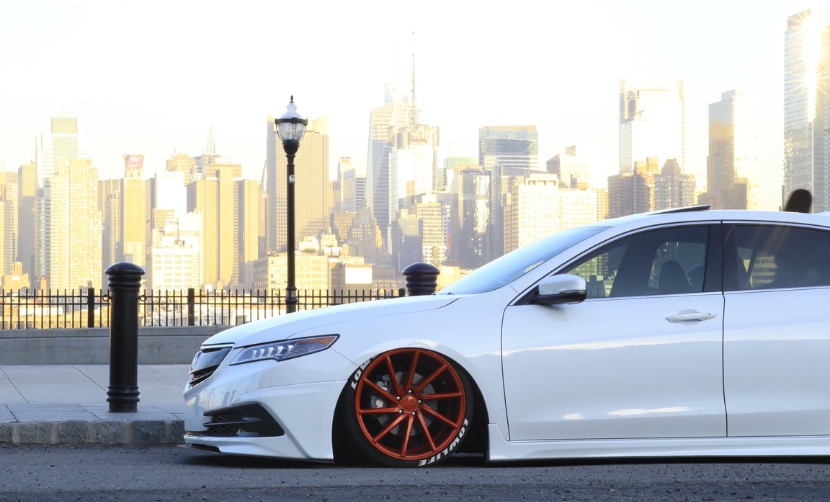
It is important to be careful when modifying your vehicle, it might look good, but it could quite easily land you with a careless or dangerous driving charge.
Window tinting
There are specific rules determining how dark the tinting of car windows can be. The side windows at the back and rear windscreen can be as dark as you like, which is somewhat surprising considering how often the rear windscreen comes in handy. The rationale for this is that a car must have two unobstructed views behind, which are provided by the two wing mirrors. However, this means that if you have dark tints on your rear windows, if you lose a wing mirror, you could be committing an offence.
In contrast, the front passenger side windows must let at least 70% of the light through, with the windscreen requiring a higher 75% of light. In theory, these percentages make sure that visibility is not affected. If you are caught with a tint that lets less than 70% of light through your front windscreen, you could be given a prohibition order stating that your car cannot be driven until the defect has been fixed. Additionally, if the windows are far below the correct transparency, you could be faced with a prosecution for driving a car that is “in a dangerous condition” and receive three penalty points and a fine.
When tinting is far below the darkness limit, you could be pursued for knowingly driving a car with a dangerous defect and could be charged with the serious offence of dangerous driving. This offence carries a minimum disqualification from driving of 12 months following which you would have to take an extended retest, along with a sentence ranging from a low level community order to a prison sentence.
If you are driving with front windows that are too dark and end up involved in a collision, or cause a collision, then you are the most likely to be charged with dangerous driving. It will be assumed that the dangerous condition of the vehicle was to blame. Causing damage to vehicles or property, or injury to others, through knowingly driving a car with a dangerous defect can be enough to land you in prison.
Tip: watch out; some car windows are produced with a very light tint that may not be obvious, so, if you add 30% you could end up breaching the light limit. Make sure you have the tint tested and check the information on the window.
Spoilers, extra exhausts, scoops, intakes and the rest
Having an unnecessary spoiler on a 1 litre Corsa, for example, is not a crime; though perhaps it should be. However, adding parts to a car cheaply that were not designed to be there can cause several issues which could amount to a crime. Additional parts need to be attached securely and in a way that ensures they will not fall off while you’re driving. Similarly, they should not have sharp edges, negatively affect the way the car drives, or block your view. If you cannot see out of your car, steer it, and brake and accelerate normally, or something is loose and therefore dangerous for other drivers, this could again be considered dangerous driving and would land you in trouble that far outweighs the fun.
Lowered cars
As with the extra parts, the act of lowering a car is not against the law, but it should be done carefully by a proper mechanic and should not be too extreme. Lowering a vehicle most commonly causes issues with steering and changes the height of the headlights, which can both be very dangerous. Once again, knowingly driving a car with a dangerous defect/modification can lead to a dangerous driving charge and very harsh penalties, particularly if you cause any damage.
Tip: do not drive a car with a suspension modification not carried out by a competent mechanic and NEVER cut or weld components together; this is a recipe for a dangerous car.
Modifications
Overall, vehicle modification is ok in moderation, as long as it’s done safely, and by a professional.
***Insurance Warning***
Another problem you may face if you do not inform your insurers of modifications, is a void policy and a no insurance charge (6-8 penalty points and an unlimited fine.) Even a seemingly innocent and minor modifaction such as adding a bike rack should be notified to your insurers.
